







As many designers and engineers have learned in engineering courses or college physics classes, heat naturally flows from areas of high to low temperature. Efficient heat transfer becomes possible when we arrange materials and design devices in ways that allow or enhance this heat flow.
Heat exchangers provide just such devices for controlled heat transfer between two fluids at different temperatures. They use heat conducting surfaces to transfer heat from a warmer medium to a colder medium. This occurs without the fluids themselves mixing together.
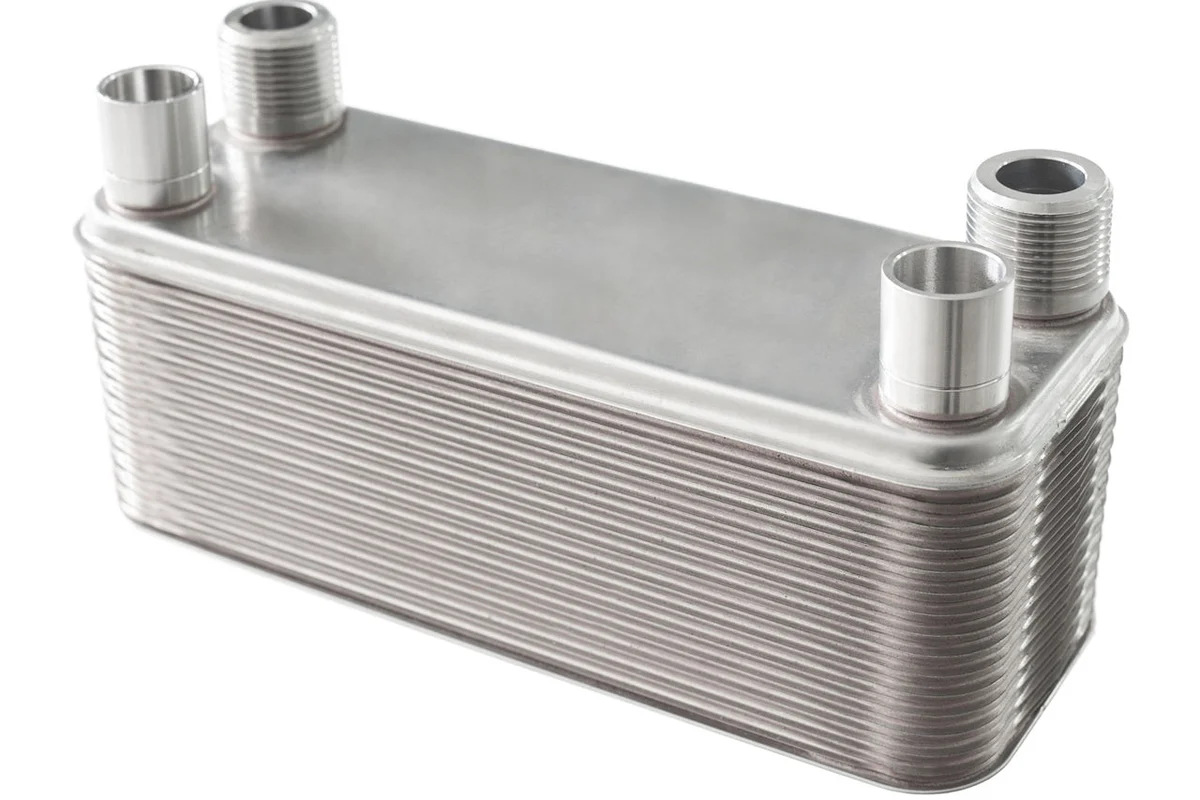
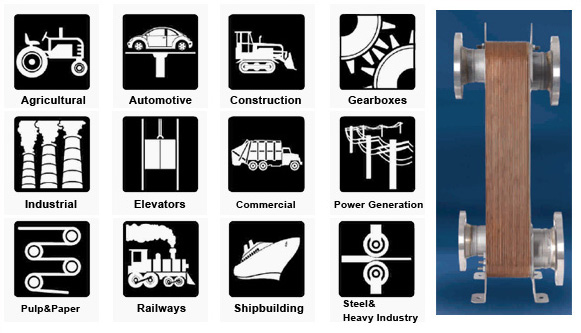
Plate heat exchangers are a very common type of heat exchanger and arguably the most relevant application of brazing technology. Applications range from cars and HVAC equipment to energy technology and drinking water fittings. The advantages and performance characteristics of brazed PHE products cannot be disconnected from brazing quality.
Structure and Principle of Plate Heat Exchanger
Basic Structure
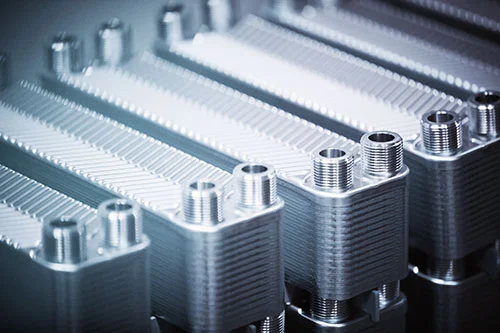
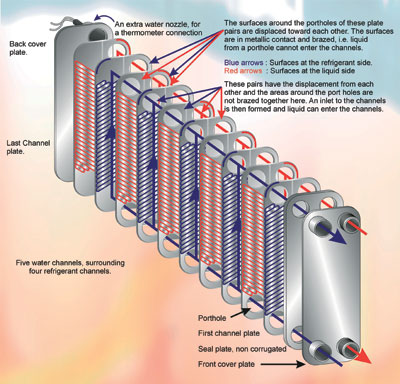
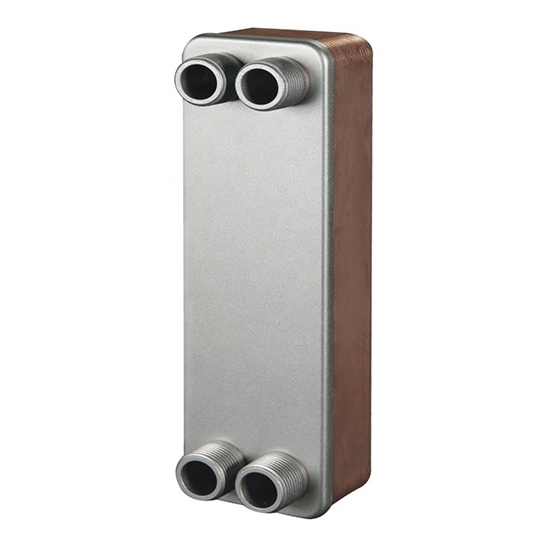
A plate heat exchanger consists of a series of thin, profiled metal plates stacked in an alternating fashion. Each plate is embossed with corrugations or chevrons that create a serpentine flow path when stacked. The hot and cold fluids are then routed through parallel flow paths, which are separated only by the thin walls of the plates, making for highly efficient heat transfer.
From a manufacturing standpoint, this laminated material has the properties of a “metal book.” The plates represent the pages, and the brazed areas represent the invisible but very strong adhesive that holds all the pages together to form a solid block.
Without brazing, it would be impossible to maintain structural integrity under operating conditions.
Material Choices
Material choices for brazed plate heat exchangers vary strongly with application environments:
Applications for stainless steel PHEs:
Civil water fittings, food technology, chemical engineering. Austenitic stainless steels such as 1.4401 (AISI 316) or 1.4301 (AISI 304) are most common. These alloys offer corrosion resistance and mechanical strength, good weldability, and sanitary characteristics. A stable oxide film forms on the surface to prevent localized pitting, stress corrosion cracking, or crevice corrosion.
Applications for aluminum PHEs
Automotive radiators and charge air coolers, oil coolers, compact HVAC units. Aluminum brazing sheets made from AA3003 alloy cores clad with Al-Si filler layers are widely used. Aluminum’s low density and thermal conductivity enable lightweight, compact heat exchanger designs.
Brazing Processes Used in Plate Heat Exchangers
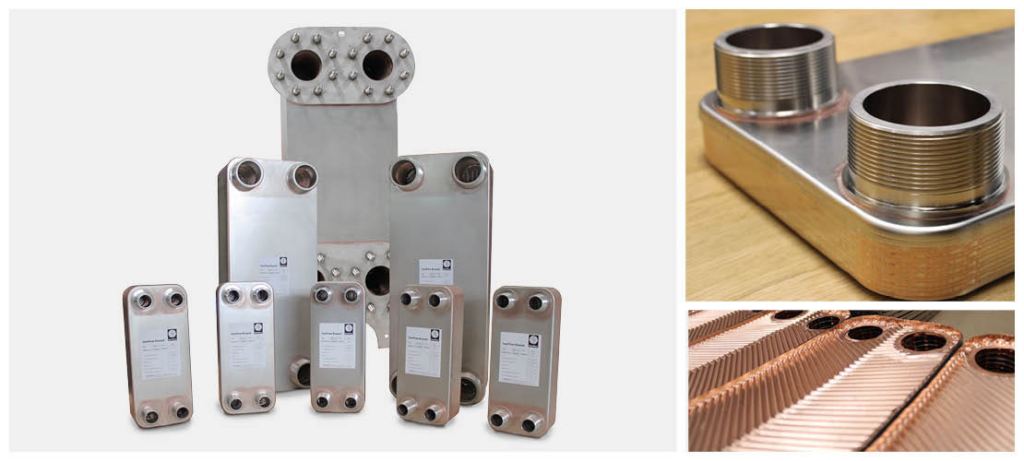
Vacuum Brazing Stainless Steel PHEs
In stainless steel PHE production, brazing is typically performed at 1050–1150 °C in industrial vacuum furnaces. Two processes occur simultaneously in this consolidated step:
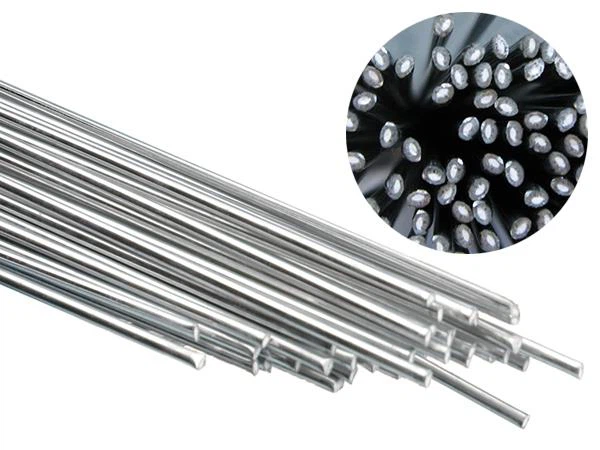
Pure brazing: Melting filler metal (typically nickel-based or copper-based alloys) to form capillary seam welds between plates.
Solution annealing of stainless steel: Heating stainless steel to typical brazing temperatures (1050–1150 °C), which are well above the solution annealing range, allows for the dissolution of chromium carbides formed during heating, thereby restoring the material’s full corrosion resistance upon rapid cooling.
Benefits of vacuum brazing stainless steel PHEs:
- Fluxless, oxide-free surfaces
- Visibly clean joints suitable for drinking water and food applications
- Maximum joint strength and corrosion resistance
Industrial furnace technology for stainless steel PHEs is focused on stable temperature uniformity and accurate atmosphere generation/consumption. Brazing many stacks of thin metal plates at once creates significant challenges in heat distribution across the load.
Equipment with which the author is familiar that would be directly relevant for readers whose supplier’s product range includes industrial vacuum brazing furnaces for heat exchanger production. Please let us know if you know of any, and we’ll add them to the list.
Controlled Atmosphere Brazing Aluminum PHEs
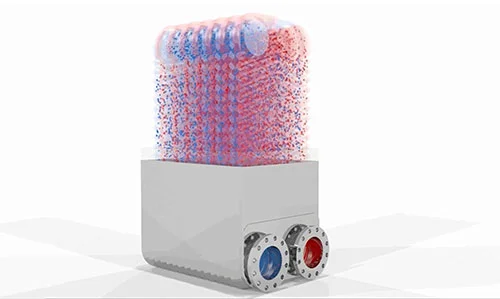
Controlled Atmosphere Brazing, or CAB, is the predominant joining method for aluminum plate heat exchangers today. It involves:
- Start with aluminum core plates with an Al-Si filler layer already clad to their surface.
- Heating assembly to ~600 °C in a furnace filled with nitrogen gas.
- Melting and flowing of the clad layer to form brazed joints while the core material remains solid.
Pros of CAB include:
- High production throughput
- Consistently repeatable joints
- Suitable for continuous belt furnace configurations
The challenge with CAB is maintaining uniform temperature across the PHE core. Any cold spots or hot spots will result in defects.
Filler Metal Application and Innovation
Types of Filler Metals
The most common filler metal systems used in PHE brazing are:
Nickel-based alloys (BNi series):
These are most commonly used in the brazing of stainless steel PHEs, particularly in drinking water and chemical applications. They provide high strength, good corrosion resistance, and excellent wetting properties.
Copper-based alloys (BCu series):
These are used in certain industrial heat exchangers but are less desirable in potable water applications due to the risk of corrosion and ion leaching.
Al-Si filler alloys:
These are integrated as clad layers in aluminum brazing sheets for CAB applications.
Pre-placing Methods
In order to provide an even distribution of filler metals on the large, corrugated plate surfaces, the following advanced methods are employed:
Amorphous Foils (BNi-5b / MBF-51):
Thin metallic foils are placed between the plates, enabling automated assembly and providing clean, residue-free joints. The uniform thickness of these foils provides consistent joint gaps and brazing quality.
Screen Printing:
Filler metal powder paste is printed on the plate surfaces using a mesh. This technique enables precise control over filler metal quantity and location.
Rolling Tape Method:
Filler metal powders are incorporated in adhesive tapes and applied to the joint areas, making handling and positioning easier during assembly.
These techniques are critical in high-volume production, where joint quality has a direct impact on the pressure resistance and reliability of assembled joints.
Primary Application Areas of Brazed Plate Heat Exchangers
Automotive Exhaust Gas Cooling
One of the most widespread application areas for brazed PHEs. You’ll find them in applications such as:
- EGR coolers
- Engine oil coolers
- Transmission oil coolers
- DPF thermal management systems
Both aluminum and stainless steel PHE assemblies must meet strict requirements for leak tightness. They are subjected to high thermal stresses, vibration, and, in some cases, exposure to corrosive exhaust gases.
Civil and Foodservice Heating/Cooling Systems
Stainless steel brazed PHEs are the industry standard in applications like:
- Domestic hot water glycol heating/cooling systems
- Central heating/cooling loops
- Food processing cooling/heating systems
Nickel-based filler metals are preferred over copper-containing filler metals when coming into contact with oxygenated drinking water. Aggressive attacks or passive film breakdown can lead to localized pitting or anodic disintegration of copper joints. Stainless steel PHEs that have been properly brazed and passivated exhibit superior corrosion resistance and hygiene performance. They easily meet health and safety standards.
Energy and Environmental Systems
Increasingly, brazed PHEs are used in high-efficiency clean energy systems, including:
- Heat pumps
- Fuel cell thermal units
- CO₂ refrigeration systems
- Waste heat recovery systems
Thermal insulation layers are necessary between the PHE plates and the outer housing. Brazed plate heat exchangers allow for compact sized heat exchangers that maximize pressure resistance and offer excellent thermal efficiency.
Technical Challenges and Scientific Simulation
Residual Stress Management During Brazing
Assembled plate heat exchangers are comprised of many thin metal sheets joined around the perimeter. This design is susceptible to distortion and uneven residual stress generation during thermal cycling. Common failures related to stress include:
- Warping of the entire PHE
- Cracks in brazed joints
- Premature fatigue failure in service
FEA can be used to model:
- Temperature distribution during the brazing cycle
- Residual stress generation in brazed joints
- Effects of plate thickness, profile shape, and Brazing gap size on residual stress
Application of proper assembly design and optimized heating cycles can greatly reduce plate deformation after brazing.
Temperature Uniformity in Brazing Furnaces
Due to the stacked layered structure of PHEs, achieving uniform temperature across the entire width of the load is critical for process consistency. Too low temperatures result in incomplete melting of filler metal. Too hot and your plates may warp or create weak joints. One method of modeling temperature distributions during transient heating is called Equivalent Zonal or EZ modeling.
Nickel Release From Stainless Steel PHEs
When properly passivated, no copper is released from stainless steel PHEs into drinking water. Nickel is a byproduct of using nickel-based filler metal joints. Researchers have found that when:
- Gap size is well controlled during assembly
- Nickel filler metal is evenly distributed across the joint surfaces
- A stable passivating oxide layer forms on stainless steel surfaces
Nickel ion levels will remain well below the EU legal limit of 20 µg/L.
Conclusion
Brazing technology is what allows manufacturers to create leak-proof, pressure-resistant assemblies of thin metal plates. There are many different ways to braze PHEs, whether it’s high-temp vacuum brazing of stainless steel or CAB of aluminum cores. Joint integrity determines thermal conductivity, pressure rating, corrosion durability, and lifespan of brazed plate heat exchangers.
Material science, filler metal development, furnace design, and process control all play a role in how a finished heat exchanger will perform. Brazed plate heat exchangers continue to find application in automotive heat management, HVAC systems, clean energy technology, and drinking water applications because they allow heat to be transferred efficiently and safely from one medium to another.
Brazing is the strong glue that binds every page together. It holds the plate pages together under pressure and thermal stress. More importantly, brazing creates a continuous protective layer that allows harmful pollutants, temperature fluctuations, or clean drinking water to pass by harmlessly.
For manufacturers seeking reliable and high-precision brazing solutions for plate heat exchangers, partnering with an experienced technology provider makes all the difference. Dodo Machine offers brazing equipment and turn-key solutions for fabricating high-quality heat exchangers, and their solutions are engineered to handle complex plate geometries and high-volume production demands found in plate heat exchanger manufacturing.
Learn about the benefits of controlled-atmosphere brazing, maintaining tight temperature tolerances and much more to help streamline your brazing process for optimal joint strength and long-term corrosion resistance at Dodo machine.